Thursday, July 9, 2009

Part Two - a Renewable Energy Pilot Program for Sarasota

This is a reprint of my article for Creative Loafing

Lighting a fire for a renewable energy pilot program in Sarasota

While the citizens of Sarasota are very supportive of renewable energy and promote sustainability, our state representatives pretty much ignored any renewable energy legislation that was introduced this past legislative session. Rep. Keith Fitzgerald wrote a bill for a Feed-In Tariff (now called the Renewable Energy Dividend) that would have created legislation requiring all utilities within the state of Florida (municipal or otherwise) to purchase energy at a retail rate from residents and businesses who elected to participate in the program. These participants would generate energy themselves by placing solar panels on their homes, fields, or buildings and hooking up to the grid through net metering. They would then sell any unused electricity back to the utility company for a profit to help offset the costs of the equipmen

The purpose of this bill was to support a renewable energy market that would create jobs and promote industry. This bill had bipartisan support in the House, but was never introduced for a vote.

On June 19, at a Florida Power and Light (FPL) hearing in Sarasota that allowed our residents to voice their opinions about a rate hike request, the attendees also saw in attendance our elected officials: State Reps. Keith Fitzgerald and Doug Holder, Vice Mayor Kelly Kirschner, County Commissioners Jon Thaxton and Joe Barbetta, and representatives of the office of U.S. Rep. Vern Buchanan. A coalition had been formed with these elected officials just prior to the event to promote a pilot program in Sarasota that would establish a Renewable Energy Dividend (RED) program for residents. Sarasota does not own its own utility company and a few years back signed a 30-year lease with FPL. Wanting to have a similar RED program that is working right now in Gainesville, Sarasota will need to partner with FPL in order to do so.

Solar power is the main way most Floridians choose to create renewable energy. Here in Sarasota, the Triple J Ranch has installed a $500,000 solar array on two of its horse barns; they now provide more than 90 percent of the ranch’s energy. The owners of the Triple J felt a responsibility to not only make their operation more energy-efficient, but they also wanted do their part in protecting the environment against climate change. Taking advantage of the state and federal stimulus programs that are in place to support such efforts, they are also expecting to receive a good portion of their costs back, along with a tax credit.

So far, Triple J’s experience has been far from perfect. The ranch claims that FPL unnecessarily held up installation for months before they were granted the proper certification for the project. The Triple J is also unhappy with the amount of money FPL actually pays for the energy it purchases. FPL sells the Triple J energy to its other customers at almost three times what it originally paid. The Triple J is also ahead of the curve on the stimulus programs and are finding that there are kinks in the system that have to be worked out before they receive the money that was promised. Altogether, it’s been a trying time for a company that was trying to do the right thing. This is where Rep. Fitzgerald’s bill would have offered help. The bill would have regulated this business arrangement between them and FPL.

Even though FPL is regulated by the Public Service Commission (PSC), they are still the only game in town when it comes to our energy. When others have decided to take on FPL through the state legislature, they are met with an incredible army of well-paid lobbyists who are prepared to protect FPL’s interests. Just recently, a viable contender met up in Tallahassee to support Fitzgerald’s bill: Florida Crystals (aka Domino Sugar). Wanting the same thing as the Triple J, Florida Crystals went to FPL first to see if a better deal could be worked out. FPL wasn’t interested in doing anything beyond what the state allowed, so Florida Crystals started pounding the pavement up in Tallahassee this past session pushing for a statewide RED. Even with Florida Crystals’ money and influence, the Renewable Energy Dividend went nowhere.

So where does this leave the citizens of Sarasota?

Well, a few local politicians have decided to do what the state couldn’t. This coming Monday, in partnership with FPL, there will be the first in several meetings that are planned to work out the details. They want Sarasota to be the first to have a pilot program that would incorporate the main idea of Fitzgerald’s bill and satisfy Sarasota’s desire to become a sustainable city, create green jobs and keep FPL’s commitment to a renewable energy future. When asked about his expectations of the upcoming meeting, Vice Mayor Kirschner replied, “We’re appreciative of FPL being so receptive to initiate this dialogue and looking to use Sarasota as a launching pad and test ground for their commitment to community and renewable energy in the state of Florida. It is our hope that FPL will be true partners with the greater Sarasota area to help us immediately strengthen and diversify our local economy with a future dedicated to renewable energy.”
Creative Loafing

Saturday, July 4, 2009

WTF - While we weren't looking: a big win for mining!

This is the Lower Slate Lake - 2005

In June of 2005, the Army Core of Engineers gave the go ahead for the Coeur d'Alene Mines to dump 4.5 MILLION TONS of TOXIC SLURRY (WASTE) into a nearby lake. Environmental agencies were up in arms and challenged that decision by taking it to a higher court. In May of 2007, the 9th Circuit Court of Appeals ruled in the favor of the environmental agencies who said that the mining company’s permit was found to be in clear violation of the Clean Water Act.

Under the permit, the Coeur d’Alene Mines Corporation’s Kensington gold mine near Juneau is allowed to pump over 200,000 gallons per day of toxic wastewater slurry into Lower Slate Lake in the Tongass National Forest. The pollution, taking place over 10 years, will ultimately deposit 4.5 million tons of solids in the lake and kill almost all its aquatic life.


The waste that will be dumped in the lake will contain: aluminum, copper, lead, mercury and other metals. Fish in the lake are not expected to survive the dumping process. The dumping is also expected to raise the lake bed by 50 feet and increase the size of the lake by 60 acres. It also has the potential to have an effect on, not only the environment, but also the salmon industry as the waste begins to filter into the headwaters of the salmon streams.

While researching this article, I was able to pull up the Coeur d' Alene Mine's website where they have published their commitiment to environmental responsibility. It is stated below.

Our Environmental Policy:

The Company has a strong regard for environmental stewardship. We conduct our activities in such a manner as to protect the physical environment in which we operate. We comply with applicable enviromental and product safety laws and regulations and develop and implement a program to ensure compliance. We are both responsible and responsive to the concerns of stakeholders relating to the environment.

In carrying out our Environmetal Policy we:
• Adhere to environmentally sound practices for cyanide managment;
• Plan for and conduct reclamation which returns mined lands to productive land uses;
• Conduct mining activities to minimize their effects on climate change; and
• Manage mine waste safely and responsibly.


It is good to feel that not only the goverment of Alaska, the Supreme Court, the Army Core of Engineers, and the Couer d' Alene Mines are watching our backs when it comes to protoecting, not only the environment, but also the future of us all.

This is the lake in 2006 - getting ready for the toxic fill, they cut down the trees in preparation. Photos come from the Environmental Defense Fund

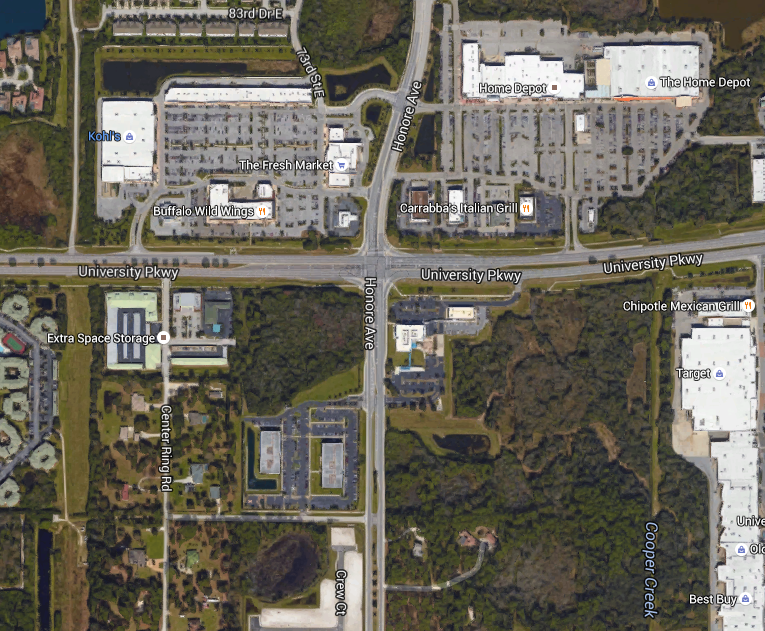
To see how this lake is situated on the map of Juneau, take a look here:

Friday, June 26, 2009

Wax On, Wax Off - The Pros...and Cons

since the bill is being voted on today, I thought it would be good to publish this.

Just a brief synopsis of the American Clean Energy Bill via Earthbeat Podcast

Wax On, Wax Off - The Pros & Cons of Waxman-Markey

Posted using ShareThis

Thursday, June 25, 2009

A Q&A with Florida Representative Doug Holder

This is the second installment of my interviews with our local state legislators. I met with Rep. Holder at his office to talk about his thoughts on where we’ve been and where we are headed.

Did the legislative session meet your expectations?

The legislative session was challenging to say the least. My expectations going in were simply our constitutional charge — which was to balance the budget. And that, in itself, was a challenge. It required the majority of our time. Did it meet my expectations? I am happy with the fact that we were able to balance the budget and at the same time increase funding per student for education. So many people love to look at the number which is allocated for education and if that number is lower than it was last year, then they say, “We cut spending.” … But that’s not true. What happens is that we have an exact amount that is allocated per student in the state of Florida and the number of students fluctuates every year. And because our student population has decreased by 6,000 students from the past year, then that number will decrease accordingly. So even though the entire amount was decreased, the “per-student” amount has increased. That is one thing that I am happy that we were able to do.

We were also able to continue funding health care to the most vulnerable in Florida. One of my biggest successes was to continue the funding for Coastal Behavioral and First Step programs.

The disappointments are that we have more work to do with property insurance and tax reform. My big focus for Sarasota is creating incentives for business to provide new jobs and revenue such as green development and a comprehensive energy plan.

Any idea on how you will go about doing that?

We are on the cusp of putting together a plan that includes renewable energy which recognizes our need to become independent of foreign oil. That is what takes away the partisanship from energy. It is a comprehensive plan that allows us to fuel our vehicles as well as power our buildings. We have to pursue renewables in order to get off of fossil fuels. If it makes more sense, and it’s better and cheaper … then I’m all for that. And I think the oil companies are too, as long as they are included in that.

The Senate passed an energy bill, but it died before it got to the House. Are you saying that the Senate energy bill wasn’t comprehensive enough?

The full interview can be found on Creative Loafing

Searching for a job in the Green Ecomony?

Green Jobs are the key to our future. the problem is that we just can give out the keys fast enough. If you are looking for a job in the Green Economy, a good resource of information and job placement is:

Hinton Human Capital Blog

Shared via AddThis

And if you are available tomorrow night, Steven has a blog radio program that you can tune into on your computer. Steven will answer questions about the certifications and licenses you will need in the new Green Economy. I spent some time on the phone with him today. He's really tuned into the what it will take to turn a down economy into a profitable future for everyone.

Hinton Human Capitol Blog Radio

This Just In: Nuclear Industry wants more subsidies with the Climate Bill

From the Nuclear Information and Resources Service
http://www.nirs.org/

The Waxman-Markey climate bill (HR 2454) is now scheduled to reach the House floor for a final vote on Friday, June 26. The House is apparently hoping to finish work on this enormous bill in one day, which means there likely will be few, if any, amendments allowed for consideration.

Still, there is some threat that some amendments will be considered. And we already have seen one proposed amendment, from Reps. Baron Hill (D-IN) and Fred Upton (R-MI), that would provide still more nuclear subsidies—this time including subsidies and tax credits for reactor manufacturing, encouraging a nuclear workforce, and encouraging reactor exports, among other issues. If amendments are allowed, other pro-nuclear amendments are likely.

Even if amendments are not allowed, opponents of the climate bill are likely to be given the opportunity to offer a full substitute bill. We have not yet seen such a bill, but this could well include key provisions of the Republicans’ energy policy, including support for construction of 100 new reactors.

The climate bill itself, which aims to place a price on carbon, is an indirect benefit to nuclear power. As a low-carbon emitter compared to coal, nuclear will benefit economically as the price of using coal rises. And that should be enough support for nuclear—there must not be any direct subsidies for this dirty and dangerous technology.

Thus, it is important to contact your House members now and let them know that enough is enough: there must be no more taxpayer support for nuclear power in the climate bill. Please send your member the letter below (please feel free to edit as you wish) and please call your member with this message as well: Capitol Switchboard, 202-224-3121.

Wednesday, June 24, 2009

CLIMATE: Waxman, Peterson announce agreement on cap-and-trade bill (06/23/2009 at 07:14 PM)

Darren Samuelsohn and Ben Geman, E&E senior reporters

Two powerful House Democratic committee chairmen announced terms of a deal this evening on a comprehensive global warming bill, paving the way for a vote later this week.

Agriculture Chairman Collin Peterson (D-Minn.) told reporters today he would vote for the House climate bill -- and bring dozens of rural lawmakers with him -- after Energy and Commerce Chairman Henry Waxman (D-Calif.) agreed to make a number of concessions that had drawn the ire of farm state members.

Waxman agreed to put the Agriculture Department -- rather than U.S. EPA -- in the lead for management of the offset program that pays farmers and other landowners to conduct environmentally friendly projects. Congress will turn to the Obama administration for guidance on how to fold in EPA.

Waxman also consented to block EPA from calculating "indirect" greenhouse gas emissions from land-use changes when implementing the federal biofuels mandate. The Democrats will impose a five-year moratorium to allow further study of the issue, with consultation from Congress, EPA, the Energy Department and USDA instrumental in restarting the measurements in the biofuels rules.

Peterson and Waxman have been negotiating for several weeks on the climate bill, with the Minnesota Democrat threatening to bring as many as 50 fellow lawmakers along with him during a floor vote on the bill.

"We have something that I think works for agriculture," Peterson said. "We have a couple of areas that may get resolved down the line, but I think we have a meeting of the minds about where we are generally headed."

"The essential thing is we have an agreement," Waxman added. "We will be moving forward Friday. We will pass this bill." Waxman also insisted he would bring environmentalists along because of the core agreement on climate.

Democratic staff are expected to write language tonight on the key agreements and plan to release the text tomorrow for inclusion in a manager's amendment before the floor debate, the chairmen said.